


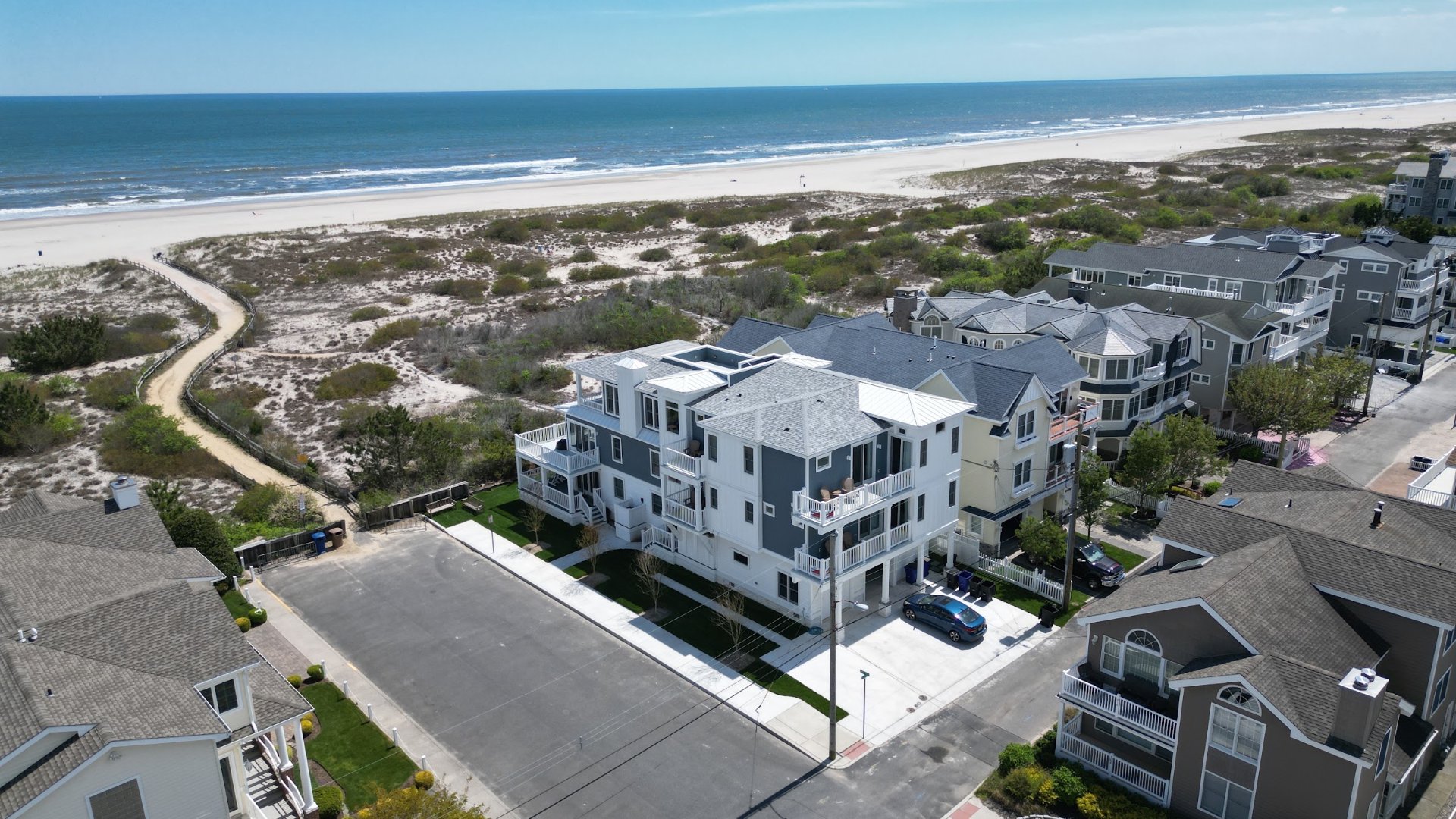
Walk almost any block in Ocean City and you will see it: one building, two front doors, two sets of decks stacked on top of each other. Many of those buildings are duplex condos, where the first floor and the second floor are owned by two different people. Here is how they work, how they compare with a single-family home, and what to ask before you buy one.
What is a duplex condo in Ocean City?
A duplex condo is a two-family building that has been legally split into two condominium units, usually one per floor. Each owner gets a separate deed to their own unit and shares the land, the roof, the outside walls and the yard with the other owner. You are buying your unit, not half a house.
In New Jersey, a condo is created by recording a master deed with the county. The master deed spells out each unit, the common elements everyone shares, any limited common elements (a deck, parking space or storage area that belongs to one unit only), and each unit's percentage share of the common elements. It also sets voting rights, the bylaws, how common expenses are split and any limits on leasing or use. The association named in the master deed runs the property, even when there are only two owners.
Duplexes are a product of zoning. Ocean City's two-family zones (the R-2, oceanfront R-O-2 and lagoon R-L-2 districts, plus a few neighborhood zones) allow two-family dwellings. One-family zones, including the Gardens neighborhood zones and the bayfront R-B zone, allow only one-family homes, so you will not find new duplexes there.
How do first-floor and second-floor units differ?
The two units in a duplex share an address and a lot, but they can live very differently, and the price of each floor in the same building is not always the same. Compare them on what matters to you rather than assuming one is better.
- Getting in and out. A second-floor unit means stairs, or a private elevator in some newer buildings. A first-floor unit is usually easier with beach gear, strollers and groceries.
- Outdoor space. Check the master deed for who gets the yard, the outdoor shower, the front porch and any roof deck. These are often limited common elements assigned to one unit.
- Parking and storage. Ask which spaces and which ground-level storage belong to each unit, and whether that is written down.
- Flood exposure. The first-floor unit sits closer to the ground, so its elevation matters more for flood risk and flood insurance. Ask for the building's elevation certificate.
- Noise, light and views. Stand in both units if you can. Ask how much sound carries between floors, and compare the light and any water views from each.
Duplex condo or single-family home: which is right for you?
A duplex condo usually costs less to get into than a single-family home on the island, in exchange for sharing a building and its decisions with one other owner. As of November 11, 2026, about 164 condos were listed for sale in Ocean City at an average asking price near $1.38 million (roughly $909 per square foot), compared with about 58 single-family homes averaging near $3.92 million (roughly $1,434 per square foot). The condo figure mixes duplex units with units in larger buildings, but the gap is real.
What you give up is control. You cannot replace the roof, change the siding or rebuild on your own schedule. Big decisions need the other owner, under the voting rules in the master deed. With a single-family home, the lot and every decision about it are yours.
If you want the whole building, some duplexes are sold as one multi-family property, and sometimes both units of a duplex condo come on the market at the same time.
How do the two owners share costs and decisions?
Shared costs are split the way the master deed says, usually by each unit's percentage interest, and decisions follow its voting rules. Many Ocean City duplexes have no management company, so the two owners agree on repairs, insurance and upkeep themselves and divide the bills.
That works well when both owners keep up their end. Before you buy, ask how the current owners handle it: is there a shared bank account or a written budget, who pays the master insurance, and is any big repair (roof, siding, decks, pilings) coming up? Property taxes are not shared. New Jersey law has each condo unit assessed and taxed as its own parcel, so you get your own tax bill.
New Jersey's reserve study and structural inspection rules, and what to read in the association documents, are covered in our guide to buying a condo in Ocean City.
How does flood insurance work for a duplex condo?
Under the National Flood Insurance Program, a unit owner can buy a Dwelling Form policy for a single-family unit in a condo building. If the association also carries a building policy (an RCBAP), the NFIP will pay no more than $250,000 in combined building benefits for one unit, and it will not pay twice for the same damage.
In a two-unit building, ask whether there is an association flood policy at all, or whether each owner insures their own unit, and make sure the two policies fit together. FEMA's Dwelling Form also includes condominium loss assessment coverage, with limits, for an owner's share of flood repairs the association assesses. Unit-owner policies do not include Increased Cost of Compliance coverage for elevating after a flood; an association's RCBAP can. Go over all of this with an insurance agent who writes flood policies at the shore. Our shore home costs guide covers flood zones and premiums.
What should you ask before you buy a duplex condo?
Start with the master deed and bylaws, then ask the seller and the other owner the practical questions. Your attorney can review the documents during attorney review.
- Is the building a recorded condominium, or two owners with an informal agreement? Get a copy of the recorded master deed.
- What are the percentage interests, and how are insurance, roof, siding and other common costs split?
- Which yard, decks, parking and storage are limited common elements of your unit?
- Are there rules on rentals, pets, renovations or rebuilding?
- Is there a shared account or reserve, and has any special assessment or big repair been discussed?
- Who carries the master property and flood insurance, and what are the deductibles?
- Is there an elevation certificate, and has the building had flood claims?
- If you plan to rent, does the unit have its rental history and the city's registration in order? See renting out your Ocean City home.
One local step to plan for: Ocean City requires an in-person smoke detector and carbon monoxide alarm inspection, with a certificate, for the sale of units in one- and two-family dwellings, and for every rental unit in them. For more to check on a showing, see our open house and inspection checklist.
Quick answers
Is a duplex condo the same as a duplex?
Not quite. A duplex can be one property with two units and one owner, sold as a multi-family home. A duplex condo has been split under a recorded master deed, so each floor is a separate unit with its own deed and its own tax bill.
Can I rent out a duplex condo in Ocean City?
Usually, if the master deed allows it. Check the master deed for rental limits first, then the city's rules: a rental registration and an in-person smoke detector and carbon monoxide inspection for each rental unit in a one- or two-family building.
Do I need my own flood insurance in a duplex condo?
Often, yes. Find out whether the association carries a building flood policy. If it does not, each owner needs to insure their own unit; if it does, a unit policy can add coverage, up to $250,000 combined per unit under the NFIP. Ask a flood insurance agent which setup the building has.
Can I buy both units?
Yes, when both are for sale. Some duplexes are listed together as one multi-family property, and both condo units sometimes come up at once. Owning both gives you control of the whole building, but it is still a condo unless the owners take the legal steps to end it.
Thinking about a duplex condo? We can pull the master deed, rental history and flood details on any unit you like, and show you what is for sale now among Ocean City condos. For the latest prices and sales, see our November 2026 market report.
Updated November 2026, by Graham and Alicia Ginn
Sources: New Jersey Condominium Act, N.J.S.A. 46:8B-8 to 46:8B-12 (NJ Division of Consumer Affairs); N.J.S.A. 46:8B-19, taxes on condominium units; City of Ocean City zoning ordinance, Chapter 25, zone districts; City of Ocean City, Fire Prevention FAQ; City of Ocean City, rental smoke detector and CO certificate application; FEMA, NFIP Dwelling Form SFIP Commentary (January 2025 update). Listing counts and averages from the MLS on November 11, 2026; they change daily. This post is general information, not legal, tax or insurance advice; check with an attorney and an insurance agent about any specific property.