


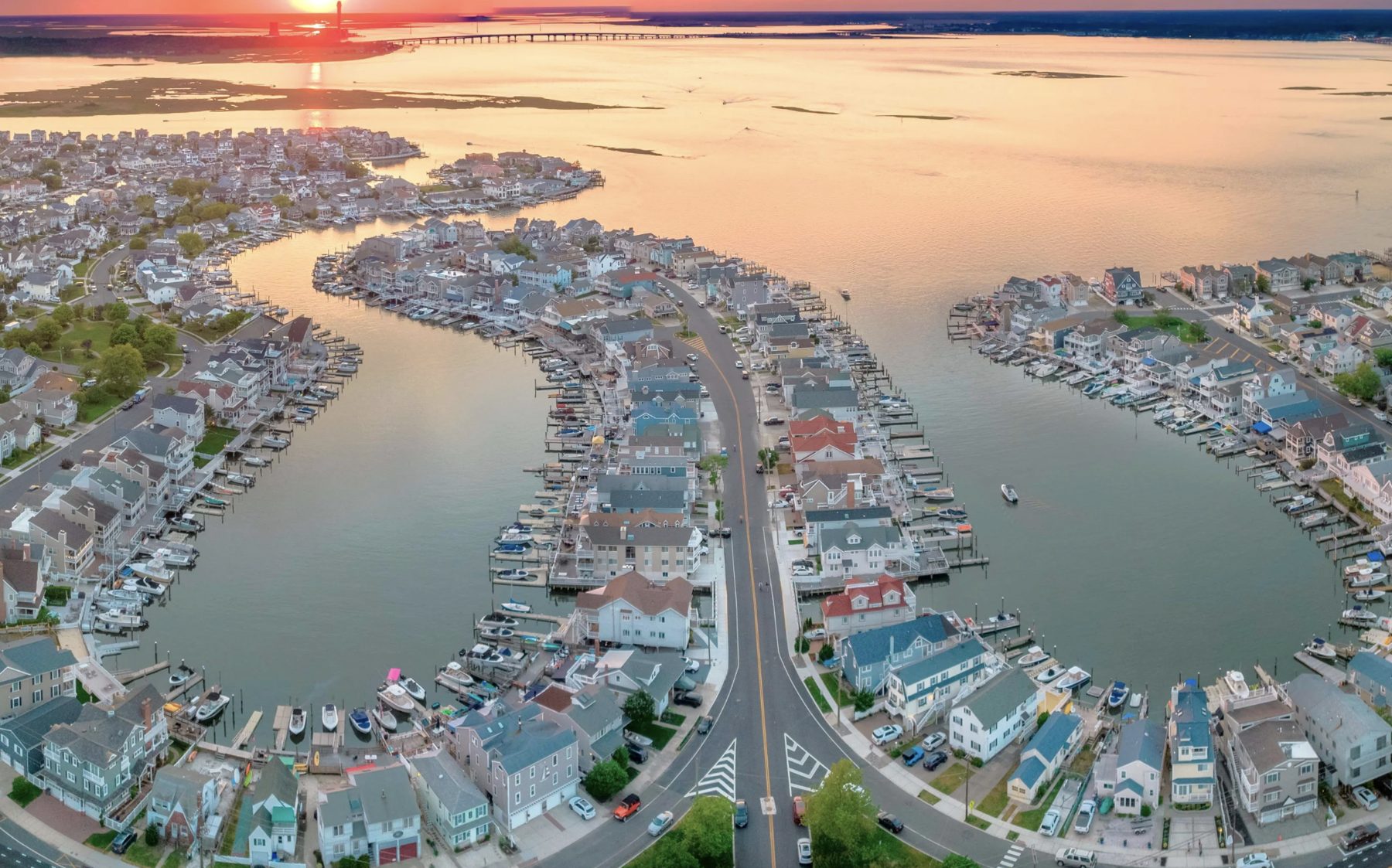
Ocean City is a barrier island, so every buyer eventually faces the same fork in the road: sunsets and a boat slip on the bay, or a short barefoot walk to the ocean on the beach block. Both are great ways to own a piece of the island, but they cost different amounts, flood in different ways and come with different upkeep. Here is how we walk our buyers through the choice.
What is the difference between bayfront and beach block in Ocean City?
A bayfront home sits on the water on the west side of the island, facing Great Egg Harbor Bay, a lagoon or a back-bay channel, and often has a bulkhead and a dock. A beach block home sits on the block closest to the ocean, a short walk to the sand, but usually not on the beach itself. Oceanfront homes, right on the beach, are a third and pricier category.
In the local MLS, "Bay Front" and "Beach Block" are location tags that listing agents choose, and a listing can carry more than one. They are a helpful shortcut, not an official map, so always look at the exact lot.
Which costs more, bayfront or beach block?
It depends on the type of home. As of late November 2026, bayfront single-family homes listed for sale in Ocean City carry the highest prices of the two, while bayfront condos average less than beach block condos. Beach block single-family homes fall in between.
Here is a snapshot from the MLS listings on our site as of November 25, 2026 (figures change daily and are rounded):
- Bayfront: about 18 listings. The 7 single-family homes ranged from about $3.4 million to $10.75 million, averaging roughly $7.6 million. The 11 condos ranged from about $724,000 to $1.55 million, averaging roughly $960,000.
- Beach block: about 52 listings, including some two-unit buildings listed both whole and by unit. The 7 single-family homes ranged from about $1.1 million to $7.5 million, averaging roughly $4.3 million. The 40 condos averaged roughly $1.37 million, with prices up to about $4 million.
- Sales: over the past 12 months, about 35 homes, condos and townhomes tagged bayfront sold, compared with about 89 tagged beach block.
Why the split on the bay? Many of the bayfront condos for sale are in buildings from the 1970s and 1980s, while most of the bayfront single-family listings are new or recent construction on lagoon or bay lots, including in the Riviera. For the full picture, see our November 2026 market report or browse Bay Area homes for sale.
Does the bay side flood more than the beach block?
Both sides can flood, just in different ways. The City of Ocean City says the whole island is in a floodplain and that flooding comes from both the ocean and the bay during hurricanes and coastal storms, with lesser flooding during lunar high tides and heavy rain. On the bay side, the water comes up from the back bay and lagoons; on the ocean side, the beach and dunes take the brunt of a storm.
The city has been chipping away at it. According to the Ocean City Sentinel, recent work includes new pump stations for the West 17th Street and Merion Park neighborhoods and ongoing dredging of back-bay waterways such as South Harbor, Venetian Bayou and Carnival Bayou.
What matters most is the specific house. Two homes on the same block can have very different flood risk depending on how high the living space sits.
How does flood insurance compare?
Flood insurance is priced home by home, based on the flood zone, the elevation of the house and other details, so there is no single bayfront or beach block price. The city notes that homeowners policies do not cover flooding and that owners with a mortgage are required to carry flood insurance.
The good news for every Ocean City owner: the city is a Class 4 community in FEMA's Community Rating System, which the city says gives most policyholders a 30% discount on flood insurance. Before you make an offer:
- Look up the flood zone on FEMA's flood map or the city's flood hazard maps.
- Search for the home's elevation certificate in the city's online elevation certificate records, or ask the seller for one.
- Get a flood insurance quote from an agent during your inspection period, not after closing.
Our shore home costs guide goes deeper on flood zones, New Jersey's flood disclosure rules and elevation requirements.
What should I know about bulkheads and docks?
On the bay, the bulkhead is part of the house. Ocean City requires a city permit before anyone builds, rebuilds or repairs a bulkhead, requires owners to keep private bulkheads in safe repair, and sets a minimum top height of 7.0 feet (NAVD 1988) for non-oceanfront bulkheads and 11.0 feet for oceanfront ones.
Bulkhead plans must be designed and sealed by a New Jersey licensed engineer, and the city will not issue its permit until any required state or federal permits, such as those from the NJ Department of Environmental Protection and the U.S. Army Corps of Engineers, are in hand. If a bulkhead deteriorates enough to be a danger, the city can order the owner to submit a repair plan within 30 days. When you look at a bayfront home, ask:
- How old is the bulkhead, what is it made of, and does it meet the current height?
- Are there permits on file for the bulkhead, dock, boat lift or floating dock?
- How deep is the water at the dock at low tide, and has the lagoon been dredged recently?
- Does the title report show a tidelands claim?
That last one surprises people. New Jersey owns land that is now or was once flowed by the tide, and the NJ DEP says a state claim on formerly tidal land is a cloud on the title even if the owner never knew about it. Clearing it with a riparian grant is optional, but the state says it takes about a year. Your title company and real estate attorney can tell you what applies.
On the beach block, the dock questions usually drop away, but flood elevation, the age of the home and parking still matter. Our shore home inspection checklist covers what to look at on either side.
Which rents better, bayfront or beach block?
Both can rent well in season, to different guests. Beach block homes offer the simplest thing in a shore rental: a short walk to the beach. Bayfront homes offer sunsets, a deck on the water and, with a dock, a place to tie up a boat or launch a kayak.
Rental income depends on the home's size, condition, parking and pool as much as the location, so ask for the seller's rental history before you count on any numbers. If you plan to rent, our guide to renting out your Ocean City home covers the city rental license and New Jersey's taxes on short-term rentals. Talk with an accountant about how rental income would be taxed for you.
How do I decide which one is right for me?
Start with how you will use the house. If you boat, fish or want to watch the sun go down over the water, the bay is hard to beat. If your days revolve around the beach and the boardwalk, the beach block puts you closer. Then compare the real costs of two or three specific homes side by side: price, flood insurance quote, bulkhead condition and taxes.
You can browse Bay Area homes with a dock, beachfront homes or every Ocean City home for sale, and our neighborhood guide explains how each part of the island feels.
Quick answers
Is bayfront cheaper than beach block in Ocean City?
For condos, often yes; for single-family homes, usually no. As of November 2026, bayfront condos on the MLS averaged about $960,000 and bayfront single-family homes about $7.6 million, compared with about $1.37 million and $4.3 million on the beach block.
Do I need flood insurance on the beach block?
If you have a mortgage, the City of Ocean City says yes: owners with a mortgage are required to carry flood insurance, and the whole island is in a floodplain. Your price depends on the home's flood zone and elevation.
Who pays to fix a bulkhead in Ocean City?
The property owner. City code requires owners to keep private bulkheads in safe repair, and any rebuild or repair needs a city permit plus any required state and federal approvals.
Can I check a home's elevation before I make an offer?
Often, yes. The city keeps searchable elevation certificate records online, and you can ask the seller for a current certificate.
Updated November 2026, by Graham and Alicia Ginn
Sources: City of Ocean City, Flood Smart; City of Ocean City, Flood Hazards and Maps; Ocean City Code, Bulkheads; NJ DEP Bureau of Tidelands Management, Instructions for Riparian Grant Applications; Ocean City Sentinel, "$42 million in capital projects proposed over next two years" (Feb. 25, 2026); MLS listing data via OCNJ.com, November 25, 2026.